

Quality vinyl windows last 20 to 40 years under normal conditions, but Edmonton’s sustained deep cold, long heating season, and freeze-thaw cycling put more stress on seals, hardware, and frames than most Canadian cities. In practice, Edmonton homeowners often see the first signs of failure between years 15 and 20, not 30, particularly in windows installed in the early 2000s with older spacer and seal technology. If your windows are in that age range, the question is not whether they will eventually need replacing but whether they are already costing you money in heat loss, drafts, and condensation without you realizing it.
This guide explains how long different window types realistically last in Edmonton’s climate, what shortens their lifespan, and the specific warning signs that indicate replacement is overdue rather than just postponed.
Key takeaways
- Quality vinyl windows last 20 to 40 years under normal conditions. Edmonton’s sustained deep cold and long heating season tend to push performance toward the lower end of that range for windows installed before modern spacer and seal technology became standard.
- The sealed glass unit is usually the first component to fail, not the frame. Fog or condensation trapped between the panes that cannot be wiped away means the gas has escaped and the window’s insulating value is permanently reduced.
- Edmonton’s freeze-thaw cycling, which can run through hundreds of cycles over a window’s lifetime, continuously stresses seals and hardware. A seal that holds through ten Calgary winters may fail sooner in Edmonton’s sustained cold.
- The clearest signs that replacement is overdue are: drafts through a closed window, frost forming on the inside of the glass on cold mornings, fog between the panes, soft or stained frames, and a heating bill that has climbed without explanation.
- Replacing windows before they fail completely is almost always cheaper than waiting. A window with a failed seal or persistent drafts costs money every single day of the heating season.
- Windows installed before approximately 2005 are likely built to older performance standards and may be significantly underperforming compared with modern glass-and-frame technology.
How Long Do Windows Actually Last in Edmonton
The most widely referenced independent benchmark for home component lifespans in North America comes from InterNACHI, the International Association of Certified Home Inspectors, which documents vinyl and fibreglass windows at 20 to 40 years under normal conditions, with lifespan varying significantly based on climate, installation quality, and maintenance. In Edmonton’s climate, the lower end of that range is the more realistic planning number for many homes.
The gap between 20 and 40 years is not random. It tracks directly to three variables: the quality of the materials used in the original window, the quality of the installation, and the conditions the window has lived in since then. Edmonton’s conditions are consistently harder on windows than those in most Canadian cities because the cold is sustained rather than cyclical. While Calgary gets Chinook relief that lets seals and hardware relax and recover, Edmonton’s windows can sit in sustained deep cold for weeks at a stretch, continuously stressing every component.
Typical window lifespan by frame material in Edmonton’s climate
| Frame material | Typical lifespan | Notes for Edmonton |
|---|---|---|
| Vinyl (standard quality) | 15 to 25 years | Seals and gas fill often fail before the frame; older spacer tech accelerates failure |
| Vinyl (premium, warm-edge spacer) | 25 to 40 years | Modern dual-seal systems handle sustained cold better, closer to the upper range |
| Fiberglass | 30 to 50 years | Dimensionally stable through temperature swings; holds seals longer |
| Wood | 20 to 30 years (with maintenance) | Moisture and freeze-thaw cycles require regular upkeep to reach the upper range |
| Aluminum | 15 to 20 years | Conducts cold; poor thermal performance in Edmonton without a thermal break |
Ranges reflect general industry guidance and Edmonton climate conditions. Actual lifespan depends on installation quality, maintenance, and specific product specifications.
What Shortens Window Lifespan in Edmonton
Edmonton’s climate accelerates window aging through three mechanisms that are more intense here than in most of Canada. The National Research Council Canada Building Durability and Resiliency Lab studies exactly these failure modes, noting that building components exposed to repeated freeze-thaw cycles undergo material stress that compounds over time. For windows in Edmonton, those cycles run through hundreds of iterations over a typical 20-year service life.
Sustained cold without recovery periods
When temperatures stay well below freezing for weeks, seals contract and stay contracted. Gaskets harden. Hardware that relies on tight tolerances begins to lose precision. Unlike a window in a milder climate that gets regular days above freezing to recover, an Edmonton window can go weeks without that relief during a January cold snap. Over the years, that sustained stress is cumulative.
Freeze-thaw cycling at the shoulder seasons
Spring and fall in Edmonton bring rapid cycling through the freeze-thaw boundary, sometimes multiple times in a single week. Each cycle slightly expands and contracts the materials in the window assembly, and those differences compound over hundreds of cycles into cracked caulking, failed sealants, and hardware that no longer fits as precisely as it once did.
Original installation quality
A window installed without proper insulation and sealing around the rough opening loses performance faster, regardless of how good the unit itself is. In Edmonton’s climate, a gap at the frame edge that lets warm air escape and cold air infiltrate puts the window in a permanently stressed state. Operating styles like hung windows that are opened and closed frequently also wear hardware faster when frames are not perfectly plumb and square from day one. A good installation buys years of additional life; a poor one loses them.
Older spacer and seal technology
Windows installed before roughly 2005 used aluminum spacers between the panes as standard. Aluminum conducts heat efficiently from the outer edge to the inner glass surface, accelerating seal degradation at the warmest point in the insulated glass unit. Modern warm-edge spacers resist heat transfer and significantly extend the seal’s life. If your windows are from the early 2000s or earlier, this is likely the component already compromising their performance.
The Three Parts of a Window That Fail First
Understanding which component fails first helps you read the signs correctly and decide whether a repair or a replacement is the right response.
The sealed glass unit
The insulated glass unit (IGU) is the sealed assembly of two or three panes with gas fill between them. It is typically the first component to show failure. The seal around the edge degrades over time, the insulating gas escapes, and moisture-laden air enters the space between the panes. The result is fog or condensation between the panes that cannot be wiped away because it is inside the unit. Once this happens, the window has permanently lost most of its insulating value, and no repair can restore it.
IGU lifespan is commonly estimated at 15 to 30 years, with the wide range driven primarily by spacer quality and sealant design. In Edmonton, units with older aluminum spacers tend to fail toward the lower end of that range. Units with modern warm-edge spacers and dual-seal construction hold up significantly longer.
The weatherstripping and compression seals
Weatherstripping is the first line of defence against air infiltration, and it degrades faster than the frame or the glass. In Edmonton’s climate, the combination of sustained cold, UV exposure on south-facing windows, and repeated opening and closing cycles wears weatherstripping down faster than in milder markets. Worn weatherstripping is often repairable, but if the frame itself has warped or shrunk so that the weatherstripping no longer contacts the frame correctly, replacement is the only lasting fix.
The frame and hardware
Vinyl frames are durable and moisture-resistant, but they are not immune to the effects of long-term thermal cycling. Over decades, frames can warp subtly, particularly at corners where the weld joints meet. Hardware, including cranks, locks, and hinges on operating windows, wears mechanically and eventually fails to hold the sash in the correct position for a full seal. A window that no longer closes and locks snugly cannot seal properly, regardless of how good the glass and weatherstripping are.
Signs It Is Time to Replace Your Windows in Edmonton
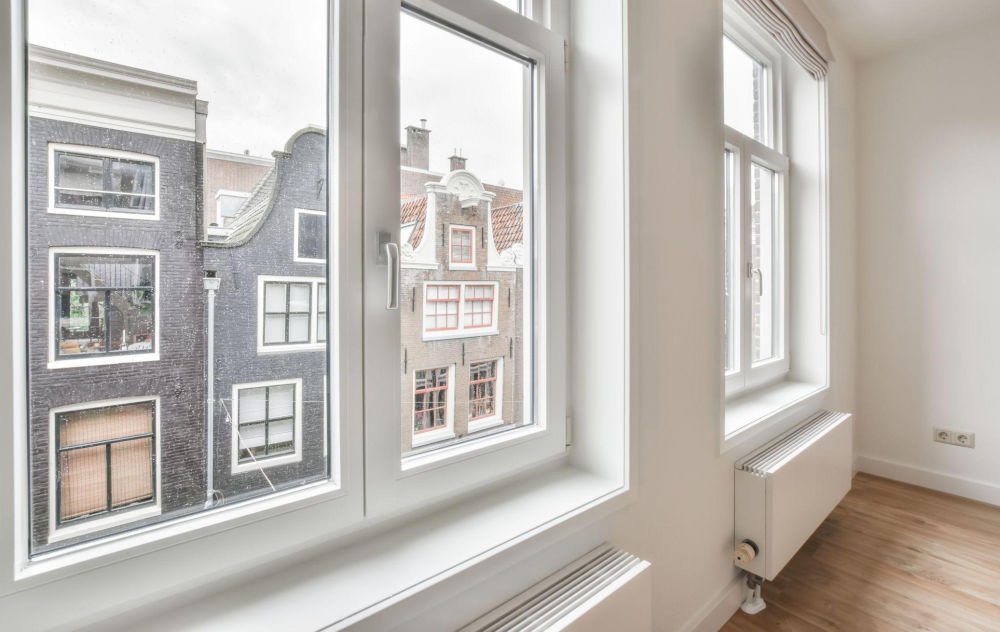
These signs appear roughly in order of urgency. Any one of them is worth addressing. Several together, particularly in windows over 15 years old, make a strong case for replacement windows in Edmonton rather than continued repairs.
Fog or moisture between the panes
This is the clearest and most definitive sign. If you can see fog, haze, or water droplets trapped between the panes of a sealed unit, the seal has failed, and the insulating gas has escaped. This is not a maintenance issue, and it is not repairable. The sealed unit, or the window, needs to be replaced. A window with a failed IGU has lost most of its thermal performance and is costing you money in heat loss every day.
Frost on the inside of the glass
Light condensation on the interior glass surface on very cold mornings is a humidity issue, not a window failure. Frost that forms on the inside of the glass and persists into the day is different. It means the glass surface is getting cold enough to drop below freezing at indoor humidity levels, which points to poor insulation in the sealed unit, a failed spacer, or a unit that was simply not designed for Edmonton’s sustained cold. This is particularly common on north-facing windows in older homes.
Drafts through a closed and locked window
If you can feel air movement with your hand near a closed window, or if a lit candle near the frame flickers, the window is leaking. Light drafts at the frame-to-wall junction are often a caulking issue and can be repaired quickly. Drafts coming through the window unit itself, through the sash-to-frame seal, mean the compression seal or weatherstripping has failed. If the draft persists after weatherstripping is replaced, the frame geometry has changed, and replacement is the right solution.
Rising heating bills without another explanation
A gas bill that has climbed steadily over two or three winters without a change in how you heat or use the home is a meaningful signal. Windows are usually the first part of the building envelope to degrade because sealed units lose their gas fill over time and frame seals deteriorate. If the physical checks above reveal no obvious failures but the bill has climbed, compare the energy use on your utility statements for the same month over several years.
Frames that are soft, stained, or difficult to operate
Press along the bottom sill and lower corners of each frame. Softness or sponginess means moisture has entered the frame material. Water staining on the interior wall trim below the window indicates water infiltrating around the window frame. A window that sticks, does not lock cleanly, or requires force to close has hardware or frame issues that affect its ability to seal. These can sometimes be repaired in isolation, but in windows over 15 years old, they usually indicate the unit is nearing the end of its useful life. Weather Pro’s Edmonton Service team can inspect and advise whether repair or replacement makes more sense for each opening.
Why Edmonton Windows Tend to Age Faster Than the Industry Average
The 20- to 40-year range published by independent inspection authorities is a North American average that includes temperate markets such as Vancouver and Toronto. Edmonton’s conditions place it firmly in the category of markets where windows work harder than average and wear out sooner.
The comparison with Calgary is instructive. Both cities have cold winters, but Calgary’s chinooks provide regular periods above zero where seals and hardware can recover. Edmonton homeowners in the older inner-city neighbourhoods and in homes built in the 1990s and early 2000s are particularly likely to find that their windows are approaching or past their effective service life, even if the frames still look intact from the outside.
The exterior condition of a frame is a poor guide to the thermal performance of the sealed unit inside it. A frame can look perfectly fine even after the gas has long since escaped from the IGU, and the window is delivering single-pane thermal performance through a double-pane product. The fog-between-panes test and the draft test are more reliable indicators than visual appearance alone.
“We regularly assess homes where the frame looks perfectly intact from the street, but once we check the glass edge, you can see the seal has been gone for years. The unit is running on air instead of argon, and the homeowner has no idea they have been heating the outdoors through it every winter.” — Chris Perry, Project Manager at Weather Pro Windows and Doors
When Replacing Makes More Sense Than Repairing in Edmonton
Some window problems are genuine repairs. Worn weatherstripping, failed caulking around the exterior frame, and worn hardware on an otherwise sound window can all be fixed without replacing the unit. The repair is worth doing when the frame is still dry and square, the sealed unit is still performing, and the window is under 15 years old.
The case for Edmonton window replacement becomes clear when any of the following is true: the sealed unit has failed (fog between the panes), the frame is soft or stained, drafts persist after weatherstripping is replaced, or the window is over 20 years old and shows multiple signs. Spending on repairs to a window in that condition typically extends its life by one or two seasons while the underlying problem continues.
A useful rule of thumb: if the cost of a repair exceeds roughly one third of the cost of a replacement unit, and the window is showing more than one sign of failure, replacement is almost always the better investment over a five-year horizon. In Edmonton’s heating-dominated climate, a properly installed replacement unit starts paying for itself immediately through lower gas bills.
How to Extend the Life of Your Windows If You Are Not Replacing Them Yet
If your windows are not yet showing the serious signs above but are in the 10 to 18-year range, a few maintenance steps can meaningfully extend their useful life.
- Inspect and replace weatherstripping annually. Before the first hard freeze each fall, check that weatherstripping compresses fully when the window closes and springs back when the window opens. Replace any section that is hard, cracked, or has lost its elasticity.
- Recaulk the exterior frame every five to seven years. The caulk line where the frame meets the exterior wall is the first line of defence against water and air infiltration. Cracked or separated caulking lets water behind the frame, which is where most moisture damage begins.
- Keep drainage channels clear. Most window frames have small weep holes or drainage channels along the bottom sill. Clear them of debris each spring so water does not pool inside the frame and work into the wall.
- Check for condensation patterns and adjust humidity. Persistent condensation on the interior glass surface means indoor humidity is too high for the outdoor temperature. Lowering the humidity reduces the stress on the sealed unit and slows seal degradation.
- Do not force stuck windows. A window that sticks is often a sign that the frame has shifted slightly. Forcing it open or closed accelerates hardware wear and can break the sash seal. Have a technician look at the cause rather than working around it.
The Bottom Line for Edmonton Homeowners
Vinyl windows last 20 to 40 years under normal conditions, but in Edmonton’s climate, the lower end of that range is the more honest planning number for many homes, particularly those built before modern warm-edge spacer and dual-seal technology became standard. The components that fail first are not the ones you can see: it is the sealed gas unit that loses its fill, the compression seals that harden and shrink, and the hardware that wears until the window no longer sits snugly against the frame.
The most useful thing any Edmonton homeowner can do is run a simple annual check: look for fogging between the panes on a cold morning, feel for drafts at the edge of the frame with a closed, locked window, and press gently on the bottom corners of each sill. Those three checks take under an hour for the whole house and give you a clear picture of which windows are performing and which have quietly crossed the line from aging to failing. A window that has crossed that line is costing you money every day of the heating season, and Edmonton’s long winters make that cost add up faster than it would almost anywhere else in Canada.
Frequently Asked Questions
How long do windows typically last in Edmonton?
Quality vinyl windows last 20 to 40 years, but Edmonton’s sustained deep cold and long heating season tend to put performance toward the lower end of that range. Windows installed before roughly 2005 with older aluminum spacer technology are particularly likely to be underperforming by their 15th to 20th year.
What is the first sign that windows need replacing?
Fog or condensation trapped between the panes that cannot be wiped away is the clearest sign. It means the sealed glass unit has failed, the insulating gas has escaped, and the window has permanently lost most of its thermal performance. Drafts through a closed window are the second most reliable signal.
Can I repair windows instead of replacing them?
For some problems, yes. Worn weatherstripping, failed exterior caulking, and worn hardware on an otherwise sound window are all repairable. If the sealed glass unit has failed, the frame is soft or stained, or drafts persist after weatherstripping is replaced, then repair is unlikely to solve the underlying problem cost-effectively.
Does Edmonton’s climate shorten window lifespan?
Yes. The sustained deep cold without chinook relief puts more continuous stress on seals, hardware, and frame geometry than most Canadian markets. Edmonton homeowners generally see the first signs of failure earlier than the 20-to 40-year average suggests.
Is frost on the inside of my windows a sign I need to replace them?
Frost on the interior glass surface means the glass is getting cold enough to drop below freezing at your indoor humidity level, which points to poor insulation in the sealed unit or an old spacer system. It is a stronger signal than condensation and often means the window is no longer performing to its original specification.
How do I know if my windows are energy efficient?
A faint blue or green tint visible on the glass indicates a Low-E coating, a hallmark of modern energy-efficient glazing. If you can see a silver metal strip at the edge of the sealed unit between the panes, it is an old aluminum spacer, indicating older technology. No visible tint and an aluminum spacer together suggest a window that is likely underperforming by current Alberta standards.