

If your Edmonton windows have drafts you can feel with your hand, fog trapped between the panes, or frost forming on the inside of the glass in January, they are telling you they can no longer do their job through an Alberta winter. This checklist covers every check worth running before the cold arrives, what each warning sign means, which problems you can fix yourself, and when replacement is the only real solution. Edmonton winters are sustained in a way that turns a borderline window into a genuinely failing one within a single season, so the time to assess is fall, not February.
Most of the checks below take under an hour to run through the whole house. The physical signs are clear enough that most homeowners come away with a precise answer, without needing a professional to tell them something is wrong.
Key Takeaways
- Most failing windows give clear warning signs before they fail completely: drafts, condensation, frost, rising energy bills, and frames that are soft or difficult to operate.
- Condensation on the inside surface of the glass is a humidity problem. Fog trapped between the panes means the sealed unit has failed and the window needs replacing.
- Edmonton winters are defined by sustained deep cold with no chinook relief. Weeks at -20°C to -30°C require greater insulation depth and tighter sealing than in most other Canadian cities.
- Windows can account for up to 25 percent of a home’s heat loss, making window performance one of the highest-value improvements in Edmonton’s heating-dominated climate.
- Minor issues like worn weatherstripping and failed caulking are quick repairs. Soft frames, failed seals between panes, and persistent frost at the glass edges call for replacement.
- September and October are the best months to run this checklist and book a replacement before freeze-up, when availability is better than during the busy spring season.
Why Edmonton Winters Demand More From Your Windows
Edmonton’s winter climate is different from most of Canada’s in one important way: the cold is sustained. While Calgary gets relief from chinooks that push temperatures up by 15°C in a matter of hours, Edmonton sits through weeks of -20°C to -30°C without that release. According to the City of Edmonton Climate Guide, space heating is the single largest consumer of energy in an Alberta home, accounting for over two-thirds of total annual energy consumption, which is why the building envelope, and windows in particular, directly determines how hard your furnace has to work every winter.
That sustained cold punishes two window weaknesses harder than short cold snaps do. The first is insulation depth: a window with only two panes and an aluminum spacer loses heat continuously through weeks of deep cold, and the interior surface of the glass gets cold enough to cause frost, condensation, and significant discomfort near any large opening. The second is seal integrity: every gap around the frame, every failed weatherstrip, and every crack in the caulking leak warm air out and cold air in, and that exchange never stops as long as the temperature stays below zero.
This is why a window that felt acceptable last winter might be noticeably worse this year. Cold and moisture continuously work on seals and frames, and the damage compounds. Running through this checklist in September gives you time to fix what can be fixed and replace what cannot before the worst weeks arrive.
The Window Readiness Checklist
Work through these checks in order. The first four are quick and need no tools. The later checks take a few more minutes but give you a complete picture of every window in the house.
Check 1: Feel for drafts with your hand or a candle
Close and lock every window, then run your hand slowly around the edges and corners of the frame, particularly the bottom corners, where frames tend to shift and settle over time. If you feel air movement, you have a draft. On a cold day, you may be able to feel it clearly even without a test. For a more sensitive check, hold a lit candle or incense stick near the frame. If the flame flickers or smoke bends toward or away from the frame, air is passing through a gap.
“In Edmonton, the draft rarely comes from the glass itself. It comes from the junction between the frame and the rough opening, especially on north and west walls where the framing contracts more aggressively through a sustained cold snap. That is the gap that adds hundreds of dollars to a heating bill and is invisible until you run the candle test on a day when it is actually cold outside.” — Chris Perry, Project Manager at Weather Pro Windows and Doors
Light drafts around the frame-to-wall junction are often a caulking problem, which is a quick and inexpensive repair. Drafts through the window unit itself, where air is coming through the sash-to-frame seal rather than around the outside of the window, usually mean the compression seal or weatherstripping has worn down. Replacing weatherstripping is manageable for most homeowners. If the draft persists even after weatherstripping is replaced, the frame itself may have warped, or the window may have lost its original seal geometry.
Check 2: Identify where condensation appears
Check your windows on a cold morning and note exactly where any moisture or frost sits. The location tells you everything about the cause.
- On the inside surface of the glass, facing the room, indoor humidity meets the cold glass. It is manageable through humidity control and ventilation and is not, by itself, a sign that the window is failing. It indicates that the glass surface is getting very cold, suggesting poor insulation in the unit.
- Between the panes, where you cannot wipe it, this means the sealed unit has failed. The insulating gas has escaped, moisture has entered the space between the panes, and the window has permanently lost its insulating value. The unit needs to be replaced. This is not repairable.
- Frost building at the bottom corners or edges of the glass: the interior surface is reaching below freezing. This is a sign of very poor edge insulation, usually due to an old aluminum spacer, and it means the window is losing significant heat on every cold night.
If you see fog between the panes in more than one or two windows, the rest of the sealed units in the same-age windows are likely not far behind. It is worth assessing all of them together rather than replacing units one at a time over several seasons.
Check 3: Inspect the frames for soft wood, staining, or distortion
Look at each frame from both the inside and the outside. Press gently along the bottom sill and lower corners of the frame. If the material feels soft, spongy, or compresses under light finger pressure, moisture has worked into the frame material. On wood frames, this is rot. On older vinyl or composite frames, it can indicate delamination or water intrusion behind the frame. In either case, the frame has lost structural integrity, and the window needs to be removed.
Also look for water staining on the interior wall or window trim below the sill, peeling paint near the frame, or a musty smell near the window. These signs indicate water has been getting past the seal around the frame and into the wall cavity, which is a more serious problem than the window itself. If you see this, a full-frame replacement is the right repair, not a retrofit, because the wall behind the old frame needs to be inspected and dried out.
Check 4: Test every window for smooth operation
Every window in the house should open, close, and lock without significant force. If an awning or sliding window requires hard cranking, sticks in the track, or the sash does not seat cleanly when closed, the frame has likely warped or the hardware has worn. A window that does not close fully cannot seal properly, which means it leaks air every hour when the temperature sits below zero.
A window that will not lock is also a security concern separate from the energy question. Test the lock on every operable window and note any that feel loose, misaligned, or that do not engage cleanly. Worn hardware on an otherwise sound window is often replaceable without replacing the whole unit, but a warped frame that prevents the sash from seating correctly is not.
Check 5: Check the caulking and weatherstripping
Walk around the outside of the house and look at the caulk line where each window frame meets the exterior wall. It should be continuous, without cracks, gaps, or sections that have pulled away from the surface. Failed caulking is one of the fastest routes for air and water infiltration in an Edmonton home, and it is also one of the cheapest things to fix. A tube of exterior-grade caulk and an hour of work can make a meaningful difference in a leaky house before winter.
On the inside, check the weatherstripping on every operable window. It should compress when the window is closed and spring back when opened. If it feels hard or cracked or has missing sections, replace it before the cold arrives. Weatherstripping is inexpensive and widely available, and it directly controls how well the sash seals against the frame when closed.
Check 6: Compare your heating bills year over year
If your gas or heating bill has climbed over the past two or three winters without a change in how you heat the home, the insulating performance of your envelope has declined. Windows are usually the first culprit before walls and the roof, because sealed units lose their gas fill over time and frame seals deteriorate. A rough comparison of your utility bills for the same billing periods over two or three years can confirm whether something has changed.
This check is less specific than the physical tests above, but it is useful as a whole-home signal. If you notice the bill climbing at the same time as you notice other signs on this list, the correlation is meaningful. If the bill is climbing but the physical checks all look fine, the problem may be elsewhere in the envelope or in the heating system itself.
Check 7: Know the age of your windows
Quality vinyl windows typically last 20 to 30 years when properly installed and maintained. If you do not know when your windows were last replaced, a few clues help narrow it down: very narrow frames, single glazing, no visible low-E coating (which appears as a faint blue or green tint on the glass), and aluminum spacers between the panes (a silver strip visible at the edge of the glass) all point to older units.
Windows in the 15 to 20-year range are not necessarily due for immediate replacement, but they are old enough that some sealed units may already be failing. For homes with larger feature openings such as a bay window, check the junction points between sashes carefully, as that is where seals tend to fail first in multi-unit configurations. Windows older than 25 years in Edmonton are very likely underperforming significantly compared with what modern glass delivers in terms of heat retention and condensation resistance.
Quick Fix or Full Replacement: How to Decide
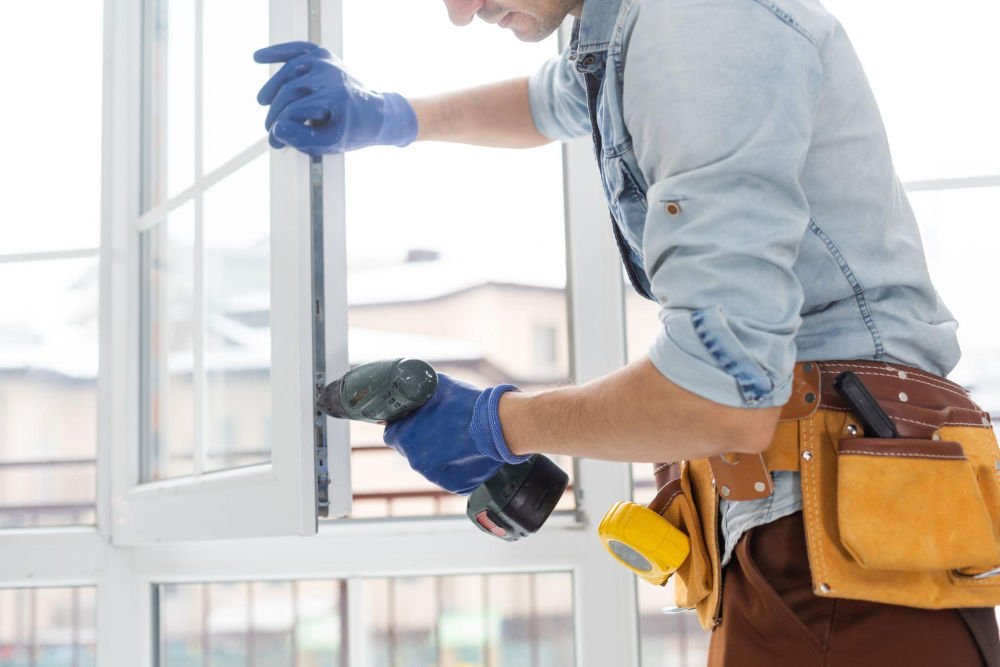
Not every problem on this checklist means replacing the window. Some issues are straightforward to repair and genuinely extend the life of an otherwise sound unit. Others cannot be fixed and are better addressed directly before they cause additional damage or incur additional costs.
Repair makes sense when
- The weatherstripping is worn, but the frame is sound, and the sash closes correctly.
- The exterior caulking has cracked or pulled away, but the frame itself shows no water damage.
- A single pane in a newer window has cracked without damaging the frame or seal.
- The hardware on a hung window is worn, but the frame and seal are in good condition.
Replacement makes sense when
- Fog or moisture is visible between the panes of a sealed unit.
- The frame material is soft, rotted, or shows water staining behind it.
- Frost regularly forms on the inside of the glass, even at moderate indoor humidity.
- The frame has warped to the point where the window cannot close and lock correctly.
- The windows are more than 20 to 25 years old, and multiple signs appear together.
- You have replaced the weatherstripping and recaulked, but drafts persist throughout the unit.
When several of these apply, addressing them as a single project usually makes more financial sense than sequential repairs that extend a unit’s life by only a year or two. That is when window replacement in Edmonton becomes the more cost-effective path, since a new unit pays for itself through lower heating bills in the first cold season.
What You Actually Get From Better Windows in an Edmonton Winter
Replacing windows is often discussed in terms of energy savings, but the more immediate return in Edmonton is comfort. A well-insulated, properly sealed window keeps the interior glass surface warm, which eliminates the cold radiation effect that makes sitting near a window uncomfortable even when the room temperature is fine. That effect disappears almost immediately after a good replacement unit is installed, and most homeowners notice it on the first cold night.
The energy savings are real and measurable. Natural Resources Canada reports that ENERGY STAR-certified windows are roughly 20 percent more efficient than average, and that windows, doors, and skylights can account for up to 25 percent of a home’s total heat loss. In Edmonton’s heating-dominated climate, cutting that share by a fifth converts directly into hundreds of dollars in gas savings each year.
Among operable styles, a casement window uses compression seals that close tightly on all four sides, making it the best-performing choice for exposed north and west walls, where Edmonton’s sustained cold hits hardest. The glass package behind that seal matters equally: sustained weeks at -25°C demand an insulation depth that a double-pane unit with an aluminum spacer simply cannot deliver over a full winter.
Where ventilation is not needed, a fixed picture window has no operating gap, making it the most airtight option available. For larger openings, this is worth considering on north walls where both heat loss and condensation risk are highest during an Edmonton winter.
When to Do This and When to Book
September and October are the right months for this checklist in Edmonton. The weather is mild enough to work comfortably outside, installation crews are available, and any replacement gets done before freeze-up. Windows can be installed in winter because crews work on one opening at a time, and the exposure period for each opening is short. But fall installation means you benefit from day one of the cold season rather than partway through it.
Waiting until January, when a draft becomes unbearable, means installing in harder conditions, often at shorter notice, and missing the early-season savings. The window market in Edmonton is also busiest in spring, so fall projects are easier to schedule and often available at better prices. If this checklist identifies windows that need replacing, booking window installation in Edmonton in September gives you the best combination of timing, crew availability, and lead time before the worst weeks of winter.
The Bottom Line for Edmonton Homeowners
A window that passes this checklist in October will almost certainly perform through the winter. One that fails on drafts, condensation between the panes, soft frames, or persistent frost at the glass edge is already costing you money and comfort, and it will cost you more by February. The physical signs are clear enough that most homeowners can complete this checklist in under an hour and come away with a precise picture of which windows need attention and which do not.
The decision between repair and replacement comes down to one question: is the problem in the seal and hardware, or is it in the frame and glass unit? The first group is fixable. The second is not, and spending on repairs to a unit with a failed sealed glass or a damaged frame just delays a replacement that was already necessary. In Edmonton’s climate, where the cold stays for months rather than days, the gap between a window that works and one that does not is wide enough that the timing of that decision matters.
Frequently Asked Questions
How do I know if my windows are losing heat in winter?
The most reliable signs are drafts you can feel with your hand near the closed frame, condensation or frost on the inside of the glass, rooms near windows that stay cooler than the rest of the house, and a gas bill that has climbed without other changes. Running a lit candle near the edge of the frame on a cold day is a quick and sensitive draft test.
Is condensation on my windows in winter a problem?
It depends on where it is. Light condensation on the inside surface of the glass on a very cold morning is a humidity issue, not a window failure. Fog or moisture visible between the panes cannot be wiped off and means the sealed unit has failed permanently. Frost forming on the inside corners of the glass means the edge insulation is very poor.
Can I repair drafty windows instead of replacing them?
Sometimes. Worn weatherstripping and cracked caulking are inexpensive repairs that can meaningfully improve a sound window. If the draft comes through the window unit itself rather than around the frame-to-wall junction, or if the frame is soft, warped, or stained, repair will not solve the underlying problem.
What is the best time of year to replace windows in Edmonton?
September and October. The weather allows for comfortable installation, crews are available before the spring rush, and you benefit from improved performance starting with the first cold nights of the season. Winter replacement is possible but less convenient, and spring is the busiest period for scheduling.
How long do vinyl replacement windows last in Edmonton?
Quality vinyl windows typically last 20 to 30 years when properly installed. The sealed glass units inside the frame may show signs of failure, such as fogging between the panes, earlier than the frame itself, particularly in homes where windows are 15 to 20 years old.
Do I need to replace all my windows at once?
Not necessarily. Prioritizing by condition and exposure makes sense: start with units that have failed seals, soft frames, or north- and west-facing openings where cold and wind exposure are highest. Replacing the worst performers first gives the most immediate comfort and energy gain, and a good installer will give you an honest assessment of which units are urgent and which can wait.