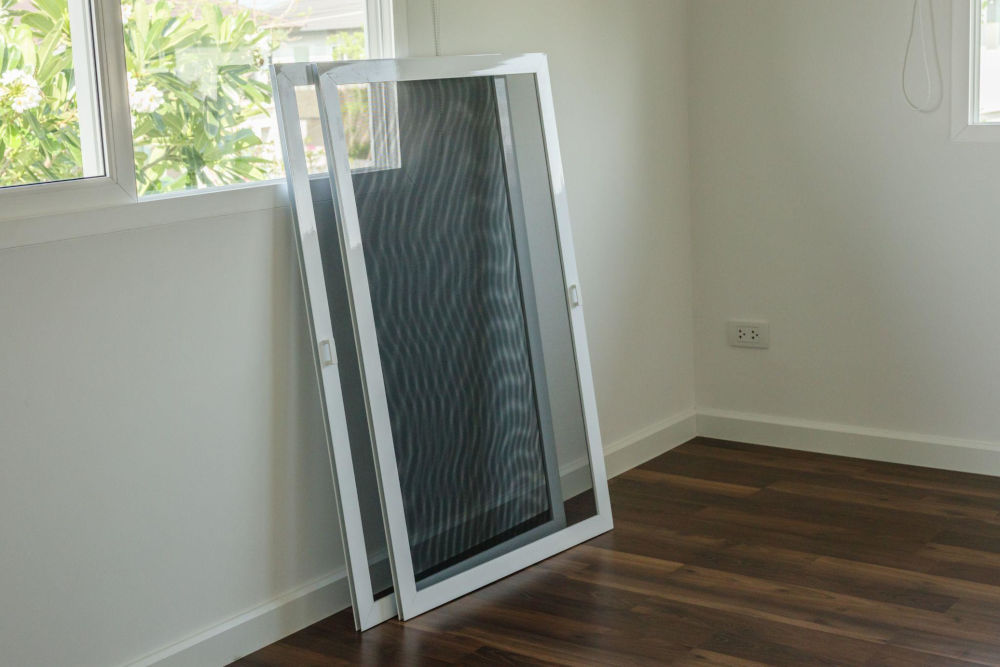

Choose screens based on three things, in this order: what they actually have to keep out where you live, where the screen mounts on the window style you own, and how much airflow and view you are prepared to trade for a tighter weave. In Alberta, that usually means a standard weave on most openings, a finer weave only where insect pressure actually warrants it, and a tight, well-seated frame everywhere, because a screen that does not sit flush lets insects in regardless of how good the mesh is. It also means being clear about the limits: a screen is not fall protection, not a smoke filter, and not a fix for a window that no longer seals.
This guide covers how Edmonton mosquito season, Calgary hail and grit, wildfire smoke, and strong western sun should shape the decision, which window styles carry the screen inside versus outside and why that changes daily life with them, how solar screens compare against a glass upgrade in a heating-dominated climate, and what to specify when screens are ordered with new windows. If you already know what you want and need the hands-on process for re-screening a frame, that belongs in the separate replacement guide rather than here.
Key Takeaways
- Fit matters more than mesh grade. A standard weave in a frame that seats tightly outperforms a premium weave in a frame that sits proud of the channel by a few millimetres.
- Insect pressure in Alberta is regional. Properties near the North Saskatchewan River valley, wetlands, or open field edges see enough activity after heavy rainfall to justify a finer weave, while a sheltered inner-city lot rarely does.
- The window style decides where the screen lives. Crank-operated units carry the screen on the interior, while sliding and hung units carry it on the exterior, which changes cleaning, storage, and hail exposure.
- Screens are not safety devices. They are not designed to prevent a child from falling, and injury-prevention organizations advise window stops or guards instead.
- Screens do not filter wildfire smoke. During smoke events, the guidance is to close windows and rely on filtration, so a screen decision has no bearing on air quality in those weeks.
- In a heating-dominated climate, solar screens solve a narrower problem than a glass package upgrade, because they block useful winter solar gain unless they are removed each fall.
Start With What the Screen Actually Has to Keep Out
Screen selection goes wrong when it starts with a product catalogue rather than with the property’s conditions. Two homes twenty minutes apart in the same city can face very different insect and debris pressure. Walk the exterior and note what is around each elevation before making any decisions.
Mosquito pressure varies by where you sit in the city
Edmonton is the clearer case. The City of Edmonton reports more than 30 mosquito species in the city, with Aedes vexans as the typical summer nuisance species, active mainly at dawn and dusk and capable of developing in about five days after heavy rainfall. The city also notes that its ground control program does not reduce adult mosquitoes migrating in from temporary water bodies in the open fields surrounding Edmonton, and that its own advice to homeowners is to ensure window and door screens fit tightly and are in good repair.
That last point is the practical one. Homes backing onto the river valley, ravines, storm ponds, or open field edges get waves of adults arriving after rain events, and those are the properties where a finer weave and a fussier fit are worth the airflow penalty. Calgary sees lighter general pressure, but the same rule applies near the Bow and Elbow corridors and around stormwater ponds in newer communities.
Hail, grit, and seed fluff are the Calgary variables
Southern Alberta sits in an active hail corridor, and exterior mounted screens take the impact before the glass does. A screen will not stop hail damage, but a heavier weave in an aluminum frame survives a moderate event that shreds a light fibreglass panel, which matters on the west and south walls that take the leading edge of a summer storm.
Two other local nuisances shape the decision. Spring wind carries road grit and dust into screens on exposed lots and along gravel access roads, and early summer brings poplar and aspen fluff that packs into any weave finer than standard until airflow drops noticeably. On heavily treed streets in mature neighbourhoods, a tighter mesh needs more frequent attention for that reason alone.
Sun exposure changes what you notice through the mesh
South and west elevations get strong, low-angle afternoon sun in Alberta, and mesh colour affects both glare and how much you see through the screen. Darker charcoal mesh reads as more transparent from inside because it absorbs rather than scatters light, while lighter grey mesh scatters and looks hazier against a bright sky. On a picture window flanked by operating units, matching mesh colour across the group keeps the view consistent.
Where the Screen Sits: Interior or Exterior by Window Style
Most homeowners never think about which side the screen mounts on until they live with it. It determines whether you can clean the mesh without a ladder, whether the screen sits exposed to the weather year-round, and how visible it is from inside the room.
Crank-operated windows carry the screen on the inside
Casement and awning units swing outward, so the screen mounts on the interior of the frame. The practical consequences are all good ones. The mesh is protected from hail, wind-driven grit, and UV, so it lasts longer than an equivalent exterior panel. It can be removed and washed at the kitchen sink rather than from a ladder. The trade-offs are that the screen sits between you and the glass at all times, and that the crank handle passes through or beside it, which is why hardware clearance is worth checking on any replacement panel.
Sliding and hung windows carry the screen on the outside
Because the sash moves within the frame, the screen on a slider or a hung unit sits in an exterior track. That means the mesh is exposed to weather year-round unless it is removed, and cleaning the outside face means reaching the opening from outside. On upper floors, that is the difference between a fifteen-minute job and an afternoon with a ladder.
It also affects how much of the opening the screen covers. On hung windows, a half screen covers only the operating sash, keeping the upper half of the view clear but limiting ventilation to the lower opening. Full screens cover the entire opening and allow a double-hung unit to be vented top and bottom, which is the more useful configuration in a bedroom.
Horizontal sliders behave the same way. On single-slider windows, the screen covers only the operating half, so the fixed half of the opening stays clear. Homeowners who dislike looking through mesh often prefer this arrangement over a fully screened opening.
Tilt-and-turn and shaped openings are a case of their own
European-style units that both tilt inward at the top and swing inward on a side hinge take an exterior-mounted screen, often a fixed frame or a retractable roller cassette, because the sash occupies the interior plane. Anyone specifying tilt-and-turn windows should confirm the screen type at the order stage rather than after installation, since retrofitting a cassette later is more disruptive than including it in the original order.
Fixed units carry no screen at all. Picture windows, fixed casements, and the fixed sections of bay and bow assemblies do not open, so there is nothing to screen. That surprises homeowners who assume a screen count matches a window count, and it is worth confirming on a quote so the numbers make sense.
Mesh Choice as a Trade-Off, Not a Catalogue
Every step toward a finer or tougher weave costs something in airflow, light, or view. The useful question is not which mesh is strongest; it is which trade you are willing to make at each specific opening.
Standard insect mesh is an 18-by-16 weave and is the default for good reason: it blocks the insects most Alberta homeowners actually encounter while keeping airflow and visibility high. A 20-by-20 no-see-um weave closes the gaps enough to stop the smallest biting insects and blowing seed, at a measurable cost to air movement and a slightly hazier view. Heavier pet-grade polyester resists claws and pressure at ground level. Solar fabric blocks a portion of incoming sunlight and appears noticeably darker from inside.
| Screen choice | What it improves | What it costs you |
|---|---|---|
| Standard 18 by 16 weave | Airflow, visibility, price | Lets the smallest biting insects through |
| Fine 20 by 20 no-see-um weave | Stops small biters and blowing seed | Noticeably less airflow, hazier view, clogs faster with fluff |
| Heavier pet grade polyester | Survives claws and pressure at low openings | Higher cost, heavier look, slightly reduced airflow |
| Aluminum weave | Holds shape, better on exposed west walls | Creases permanently once bent, more visible from inside |
| Solar fabric | Cuts glare and afternoon heat on west rooms | Darker interior, less airflow, blocks useful winter sun if left up |
The pattern worth remembering is that finer is not better; it is different. Putting no-see-um mesh on every opening in a house that only has an insect problem on two walls means the whole house ventilates worse for the sake of two rooms.
“The complaint I hear most in summer is not about mesh grade; it is about fit. Exterior screens on sliders sit in a track that collects grit through spring, and once that track is packed, the panel rides a few millimetres proud of the frame. That gap is more than enough for mosquitoes, and it also makes the screen buzz in a west wind. Clearing the track and checking that the panel seats flat along its full length fixes more insect complaints than upgrading the mesh ever has.” Chris Perry, Project Manager at Weather Pro Windows and Doors
What Window Screens Cannot Do
A large share of homeowner disappointment with screens comes from expecting them to solve problems they were never built to solve. Being clear about the boundaries makes the actual decision easier.
They are not fall protection and not security
This is the one that matters most. According to Parachute, Canada’s national injury prevention organization, a screen can tear or be pushed through when a child presses against it, and the recommended measures are window stops that limit how far a window can open, or window guards fitted with a quick-release for emergencies. Furniture placement matters as well, since climbing on anything near a window gives a small child access to the opening.
The practical takeaway for a household with young children is that the screen decision and the safety decision are separate purchases. Choose the mesh you want for insects, then add stops or guards on upper-floor openings regardless of which mesh you chose.
They do not change energy performance or block noise
Screens sit outside the sealed unit and have no meaningful effect on U-factor, condensation, or heat loss in winter. They also do very little for sound, because standard weave is far too open to block sound transmission. If cold glass, drafts, or road noise are the actual problems, they are glass package and installation problems, and no screen decision will move them.
They do not compensate for a window that no longer seals
If a sash does not close evenly, the frame has shifted, or the lock no longer pulls the sash into the seal, insects are entering around the sash rather than through the mesh. Replacing the screen in that situation solves nothing. The test is simple: close and lock the window, then run a hand around the sash perimeter on a windy day.
Solar Screens Versus a Glass Upgrade in a Heating Climate
Solar screens are most often needed in July, when a west-facing room becomes uncomfortable by late afternoon. They do work, but in Alberta they solve a narrower problem than most homeowners expect, and the alternative solution is usually better value.
What a solar screen actually does
Solar fabric intercepts a portion of the sun’s energy on the outside of the glass, before it enters the room. Because it blocks energy from entering the building envelope, it is more effective than an interior blind for the same job, and it also cuts glare and provides some daytime privacy. The costs are a darker room, reduced airflow through that opening, and a screen that is visibly different from the others on the house.
Why a glass package usually wins here
Alberta homes spend far more of the year heating than cooling. A solar screen blocks solar gain in January exactly as it does in July, so unless it is removed every fall, it works against you through the months that matter most for energy bills. A Low-E coating selected for the exposure does the same summer job with far less winter penalty, and it is part of the sealed unit rather than a seasonal chore.
Where solar screens still make sense
They earn their place on a specific opening rather than a whole house: a west-facing bedroom in a home without air conditioning, a home office where afternoon glare makes a screen unusable, or a sunroom that overheats. Fit them to those openings, keep standard mesh everywhere else, and plan to take them down for winter.
Screens, Ventilation, and Smoke Season
Alberta summers now include stretches when the outdoor air is the problem rather than the solution, changing how the ventilation season is used. Screens matter enormously for eight or ten weeks and not at all during a smoke event.
During smoke events, the screen is irrelevant
Insect mesh does nothing to fine particulate. Health Canada advises protecting indoor air during wildfire smoke events by keeping windows and doors closed as much as possible, using the highest quality filter the ventilation system can handle, running a certified portable air cleaner, and limiting exhaust fan use. Fine particles are the main health risk in smoke, and no residential screen weave interacts with them.
The planning implication is worth stating plainly: if summer comfort in your home depends entirely on open windows, smoke weeks will be difficult regardless of screen quality. Filtration and mechanical cooling are the tools for those periods.
Night flushing is the local habit worth building around
Alberta’s dry air and large day-to-night temperature swing mean that summer evenings usually cool off sharply, even after a hot afternoon. Opening the house in the evening and closing it by mid-morning moves a lot of heat out at no cost, and that routine is only pleasant with screens that sit properly on the openings you actually use. In practice, that means the bedroom and stairwell openings deserve the best fit in the house, because they carry the airflow.
Fit, Colour, and Hardware: The Details You Live With
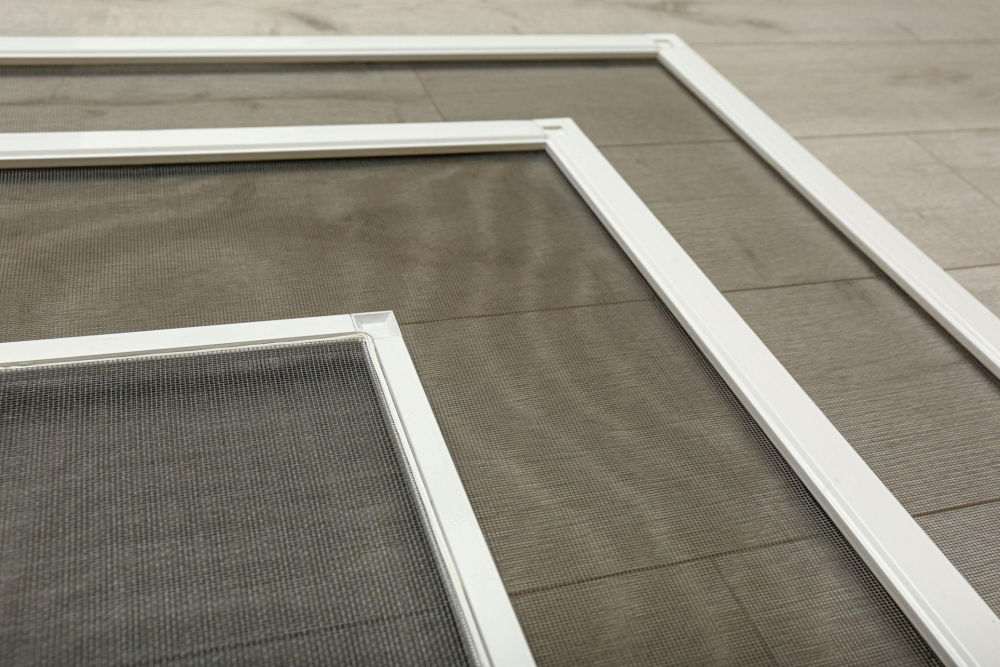
Once the mesh and mounting are settled, a few details determine whether the screens feel like part of the window or an afterthought. These are easy to specify at order stage and awkward to change later.
- Full screen or half screen. Full screens ventilate more and look consistent across an elevation. Half screens keep half the view unobstructed. Decide per room rather than per house.
- Mesh colour. Charcoal reads more clearly from the inside; grey is slightly more visible from the outside. Keep it consistent within a room and across a window group.
- Frame colour. Screen frames should match the window frame, not the trim. A white screen frame on a black window is one of the most common visual regrets.
- Pull tabs and finger lifts. Exterior sliding screens without a proper tab are hard to remove cleanly, and the usual result is a bent corner within two seasons.
- Corner strength. On large openings, reinforced corners keep the frame square. Long, thin screens are the ones that rack out of shape first.
- Storage plan. Anything you intend to remove seasonally needs somewhere flat and dry to live, or it will come back out of true in spring.
Openings that are not rectangular deserve a separate conversation. Arched, angled, and circular units usually require a template rather than a measurement, so screens for specialty-shaped windows should be ordered with the window rather than sourced afterward, when the original template is no longer available.
How the Choice Changes If You Are Re-Screening an Old Frame
Selecting screens for an existing house is a slightly different exercise than specifying them with new windows, because the frame and the mounting system are already decided for you. The choice narrows to mesh, colour, and whether the frame is worth keeping.
Work backward from the frame you have
Before choosing anything, check whether the existing frame is square, whether the corners are tight, and whether the panel still seats flat in its channel. A frame that has racked out of shape will undermine any mesh you put in it, and on exterior sliders, that damage usually comes from years of being pulled out by the mesh rather than by a tab. If the frame is sound, the mesh decision is fully open. If it is not, the frame decision comes first.
Match the house, not the single opening
Re-screening one panel with whatever mesh the store had in stock is how houses end up with three different mesh colours on one elevation. If you are replacing one screen now and expect to do others over the next few years, buy the mesh in a roll and record the weave and colour somewhere you will find it later. The visual consistency across a wall matters more from the street than the consistency of any individual panel ever does.
The hands-on process itself, including how to size the spline, remove the old mesh, and set tension without bowing the frame, is covered step by step in our window screen replacement guide, so this page stays focused on which screen to choose rather than how to build it.
Specifying Screens When You Order New Windows
Screens are the last line item most homeowners read on a window quote and the first one they notice after installation. A few questions at the quoting stage prevent the common surprises.
Ask which openings include screens and which do not, since fixed units have none and the count on the quote should reflect that. Confirm mesh type and colour rather than accepting the default, particularly if any opening faces water, a field edge, or heavy afternoon sun. Ask whether the screen frame colour matches the window frame across every unit. Confirm whether screens are covered under the product warranty and on what terms, because screen coverage is frequently narrower than glass and frame coverage and often excludes tears. Finally, ask how a single-replacement panel will be ordered five years from now and what information the manufacturer will need, since a company that builds its own product can usually answer that from the original order file.
Weather Pro Windows and Doors supplies screens with operating units as part of the window order and carries a lifetime transferable warranty on its vinyl windows, with screen coverage set out separately in the warranty document. Free in-home estimates are available with no obligation within 50 km of Calgary and Edmonton, and current promotions, including savings of 30 to 40 percent on a full project and a factory rebate of $180 per opening, apply to new customers with a minimum of 3 windows or 2 doors.
The Bottom Line on Choosing Window Screens in Alberta
The decision is smaller than it looks and more local than most guides suggest. Standard mesh handles most Alberta openings well. A finer weave earns its place near water, ravines, and field edges, and in the specific rooms where evening ventilation matters most. Heavier weaves belong at ground level in homes with pets, and on exposed west elevations where wind and hail do the damage. Solar fabric is a targeted fix for one or two hot rooms, not a whole house strategy in a province that heats for most of the year.
What separates a screen you never think about from one that annoys you every summer is fit, not specification. A panel that sits flat along its full length, in a clean track, with a frame colour that matches the window, disappears into the house. And whatever mesh you choose, keep the limits in mind: screens keep insects out; they do not keep children in, they do not filter smoke, and they do not compensate for a window that has stopped sealing. If the last of those is your real problem, the screen was never the thing to fix.
Window Screen Selection FAQ
Which screen mesh is better for mosquitoes in Edmonton?
Standard 18-by-16 mesh screens out the common summer nuisance mosquito, so it is sufficient for most Edmonton homes. A finer 20-by-20 weave is worth the airflow penalty on properties near the river valley, ravines, storm ponds, or open field edges, where waves of adults arrive after heavy rainfall. Before upgrading mesh, check that the existing panel seats flat and the track is clear, because a gap at the frame lets far more insects in than the weave does.
Do window screens keep wildfire smoke out of the house?
No. Screen mesh has no effect on the fine particulate that carries the health risk in wildfire smoke. Health guidance during smoke events is to keep windows and doors closed, use the best filter your ventilation system accepts, and run a certified portable air cleaner in the room where you spend the most time. Screen choice is a ventilation-season decision and plays no role during a smoke event.
Are window screens safe enough to stop a child from falling?
No, and this is the most important limitation to understand. Screens are designed to keep insects out, and a child pressing on one can tear it or push it out of the frame. Injury prevention guidance includes installing window stops that limit how far a window can open, installing guards with a quick-release mechanism, and keeping climbable furniture away from windows. Treat the safety hardware as a separate decision from the screen.
Should I take my screens off for the winter in Alberta?
Exterior-mounted screens on sliders and hung units benefit from removal before freeze-up because they sit exposed to the weather all winter and collect ice and snow loads in the track. Interior screens on casement and awning units are already protected and can stay in place. Solar screens should come down every fall so the room gets useful winter solar gain.
Do window screens reduce how much light and air come into a room?
Yes, and the amount depends on the weave. Standard mesh has a modest effect that most people never notice. A fine-mesh weave is noticeably more restrictive of both airflow and light, which is why it makes sense to specify it only at openings where insect pressure justifies it, rather than across a whole house.
Do all new windows come with screens?
Operating units do. Fixed units, including picture windows, fixed casements, and the fixed sections of bay and bow assemblies, do not open and therefore have no screen. Expect the screen count on a quote to be lower than the window count, and confirm which openings are included to avoid surprises at installation.
My screens fit fine, but insects still get in. What is wrong?
Almost always the sash seal rather than the screen. Close and lock the window, then run a hand around the sash perimeter on a windy day and check whether air is moving through the sash-to-frame junction. Worn weatherstripping, a lock that no longer pulls the sash tight, or a frame that has shifted will let insects in around the window entirely, and no screen change will address it.