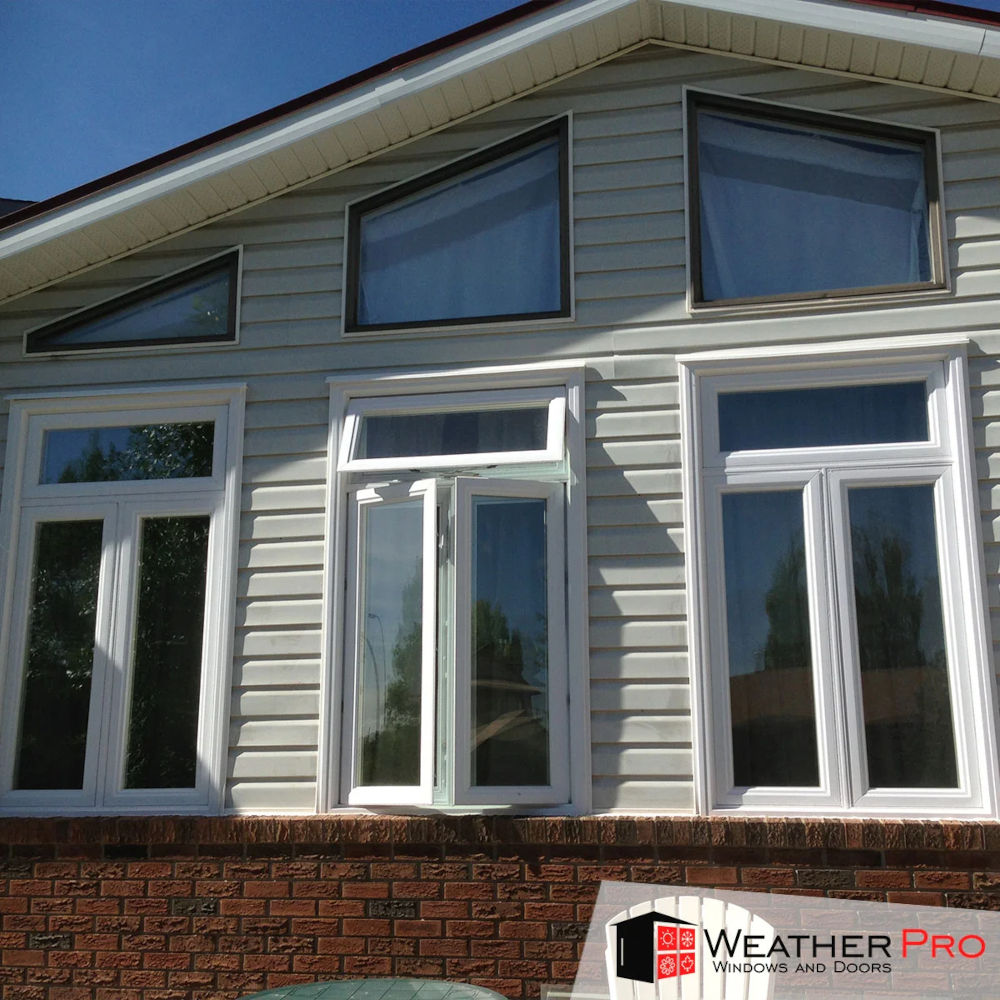

A casement window is a side-hinged window that swings outward on a crank, opening fully from top to bottom like a door. That single design choice makes it one of the most airtight and most ventilating window styles available: when closed, the sash presses against the frame on all four sides, creating a tight compression seal, and when open, the entire sash area becomes a scoop that channels even a slight breeze directly into the room. In Alberta’s climate, where homes sit sealed for months through deep winter and then need reliable ventilation through spring and summer, casement windows are a strong choice for walls where both sealing quality and controllable airflow matter.
This guide covers what casement windows are, standard sizes, the genuine pros and cons for Alberta homeowners, how they compare with sliding and awning windows, what they cost in Canada in 2026, and how to decide whether they are the right style for each opening in your home.
Key takeaways
- A casement window is side-hinged and opens outward on a crank. The sash presses against the frame on all four sides when closed, creating a compression seal that outperforms sliding styles in air tightness.
- The full-open sash acts as a wind scoop, directing outdoor air into the room more effectively than a sliding window that opens only halfway. This makes casements one of the best choices for ventilation in Alberta’s dry summers.
- In Alberta’s winters, the compression seal is the key advantage. Sliding windows rely on brushed tracks that wear over time and allow air infiltration. A casement that closes and locks correctly seals like a door on every single wall.
- The main practical drawbacks are: the outward swing requires clear exterior space, they are harder to fit with a standard window air conditioner, and the crank hardware requires occasional maintenance.
- Standard casement windows in Canada range from approximately $1,000 to $1,900+ installed in vinyl, with the final price depending on size, glass package, and installation method.
- Casement windows work best on walls where you want maximum ventilation and airtight sealing. Fixed openings, wide horizontal spaces, and basement openings are usually better served by other styles.
What Is a Casement Window?
A casement window is hinged on one vertical side and opens outward by turning a crank handle located at the bottom of the frame. Unlike a sliding or hung window that moves within its own frame, a casement swings the entire sash clear of the opening. Most casements open to the left or right depending on which side the hinge is on. A double casement, sometimes called a French casement, uses two sashes that meet in the centre without a vertical post between them, giving a wider unobstructed opening.
The defining performance characteristic of a casement is the compression seal. When the crank pulls the sash shut, and the lock engages, the sash presses against a gasket running around all four sides of the frame. This is the same sealing principle used in car doors and refrigerators. A well-made casement window creates a seal tight enough to pass the same air infiltration testing criteria as a fixed window. Sliding styles, by contrast, rely on brushed tracks along the top and bottom of the sash, which allow some air movement by design and wear down over years of use.
Fixed casement vs operable casement
A fixed casement has the same frame and sash profile as an operable unit but lacks a hinge or crank. It is permanently closed, giving maximum insulation and an unobstructed view without any operating hardware. Fixed casements are commonly used beside or above operable units to extend a window opening while maintaining a consistent look. They are also the most airtight and low-maintenance option for openings where ventilation is not needed, such as stairwells, living room feature walls, or beside a front door.
Standard Casement Window Sizes in Canada
Casement windows are manufactured in a range of standard sizes, though most quality manufacturers will also produce custom widths and heights for non-standard rough openings. In Canada, standard rough opening dimensions for casement windows typically follow these ranges:
- Width: 14 inches to 36 inches for a single casement sash. A width wider than 36 inches is generally not recommended for a single casement because the outward swing of a wide sash places excessive stress on the hinges and makes the window difficult to operate.
- Height: 24 inches to 72 inches. Tall, narrow casements are one of the most common configurations in residential construction, particularly in living rooms and bedrooms.
- Double casement: Combined widths of 36 to 72 inches are common, with two sashes meeting at the centre. These work well for wider openings where a single casement sash would be too heavy or too wide to swing freely.
If your rough opening falls outside standard dimensions, a custom casement can be ordered to fit. The lead time for custom sizes is typically two to four weeks longer than standard units. Always measure the rough opening, not the existing window, to get an accurate size for a replacement quote.
The Real Pros of Casement Windows in Alberta’s Climate
Casement windows offer genuine performance advantages over other operating styles, and several are particularly relevant to Alberta’s climate. The compression seal and the full-sash ventilation work together to give casements a clear advantage on walls where both winter sealing and summer airflow matter. Here is what each benefit actually delivers in practice.
The best sealing of any operating window style
This is the single most important advantage in Alberta. When a casement is closed and locked, the sash compresses against the frame gasket on all four sides. There is no sliding track, no gap at the meeting rail, and no path for air to infiltrate through worn brush seals. For Calgary and Edmonton homeowners who have felt a draft from a sliding window on a cold night, or noticed a whistling sound in the wind, this difference is immediate and measurable. A quality casement on an exposed north or west wall will outperform a comparable slider of the same glass specification simply because the seal geometry is better.
Superior ventilation when open
The outward swing of the sash acts as a scoop, channelling wind into the room from nearly any angle. A sliding window opens only half its frame area at most and captures wind only when it blows directly perpendicular to the glass. A casement can be positioned to catch wind blowing parallel to the wall and redirect it inside. The City of Calgary recommends ensuring homes have windows that can open, specifically noting that windows facing the prevailing wind direction provide ventilation, and that operable windows are a key passive cooling measure for homes without air conditioning. In Calgary’s dry summers, casements on south-west facing walls deliver exactly this kind of directed airflow.
Unobstructed view and maximum glass area
Because a casement has no horizontal or vertical divider within the frame when open, it offers a clear sightline. For rooms with a view of a yard, a park, or the mountains to the west of Calgary, the absence of a centre rail makes a real visual difference. The tall, narrow proportions also suit contemporary and transitional home styles well.
Strong security
Casement windows lock by pulling the sash into the frame rather than sliding a latch. The hook-style espagnolette lock, common on multi-point locking casements, engages at multiple points along the frame when the handle is turned. From the exterior, the only way to open a closed casement is to break the glass or the frame. There is no latch to manipulate from outside, which makes casements one of the more secure operating window styles.
Long-term seal durability
Because the sealing is done by compression rather than by a sliding track, casement seals do not wear down through use the way slider seals do. A slider that is opened and closed hundreds of times per year gradually wears the brush seal along the track. A casement that is operated the same number of times compresses and releases a gasket, which holds its geometry much longer. This makes casements a better long-term investment on frequently used openings in a home. Health Canada notes that Canadians spend approximately 90 percent of their time indoors, making durable, well-sealing windows one of the most practical investments in long-term indoor comfort.
The Honest Cons of Casement Windows
Casement windows have real limitations that matter for some homes and some openings. None of these are dealbreakers on their own, but they should factor into which openings you choose casements for and which you leave to a different style.
The outward swing requires clear exterior space
A casement sash swings outward by a full 90 degrees. If the exterior of the window is directly above a walkway, a deck railing, a plant bed, or a window well, the swing either cannot clear the obstruction or poses a hazard. This rules out casements for some locations: above a kitchen sink where the window is close to a fence line, beside a door in a narrow exterior passage, or above a basement window well that is too narrow to accommodate the swing.
Difficult to use with a window air conditioner
Standard window air conditioner units are designed for double-hung or slider windows where the sash slides up or to the side, and the unit sits in the opening. A casement swings outward and has no horizontal ledge to support a standard A/C unit. Dedicated casement window air conditioner units exist and are available in Canada, but they are less common, more expensive, and typically smaller than standard units. For rooms where you rely on a window A/C, this is a practical reason to consider a hung or slider style instead.
Crank hardware requires occasional maintenance
The crank mechanism, hinges, and multi-point lock are more complex than the hardware on a slider or fixed window. Over years, they can develop play, require lubrication, or need replacement. Most casement hardware is serviceable, meaning a worn crank or hinge can be replaced without replacing the whole window, but it requires identifying and ordering the correct part for your specific manufacturer. This is a minor consideration in a quality window but worth knowing.
Width limitations
A single casement sash wider than about 36 inches is impractical. The weight and the leverage on the hinges make it difficult to operate, and the seal integrity suffers. For wide horizontal openings, a double casement, a slider, or a picture window with flanking operating units is a better fit than a single wide casement.
“The homes where casements make the biggest difference are the ones on a corner lot or an exposed hillside where the wind comes from multiple directions. When that sash is open, it genuinely scoops air in, and when it is closed, you cannot tell there is a window there at all in terms of draft. The trade-off is that you need to think about where the sash swings to on the exterior before you order.” – Chris Perry, Project Manager at Weather Pro Windows and Doors
Casement Windows vs Awning Windows
Casement and awning windows share the same compression-seal principle and crank operation. The difference is the hinge axis.
- Casement: hinged on the side, opens left or right. The full height of the sash is available to scoop air.
- Awning: hinged at the top, opens outward from the bottom. The sash tilts away from the wall and can be left open in light rain without water entering the room.
For most living room, bedroom, and kitchen walls, the choice between casement and awning hinges on two things: the direction your prevailing wind comes from and whether rain-open operation matters. Awning windows are often used below a fixed picture window or a fixed casement window, providing ventilation without affecting the view through the main glass. Casements are more common as standalone operating windows because the full-sash swing delivers greater total airflow.
In Calgary and Edmonton, awning windows on the lower section of a tall opening are a common combination with a fixed upper lite. The awning can stay open through summer rain because the tilted sash deflects water away. For exposed walls facing the prevailing west-to-south-west wind, a casement often provides better-directed airflow. For walls under a roof overhang or soffit where rain is less of a concern, a casement-and-awning window configuration delivers comparable performance, and the choice usually comes down to aesthetics and opening size.
Casement Windows vs Sliding Windows: Which Seals Better?
This is the comparison that matters most in Alberta’s winters. The answer is consistent: casements seal better than sliders, and the gap widens as the windows age.
| Feature | Casement | Sliding |
|---|---|---|
| Seal type | Compression on all four sides | Track-based brush seal, top and bottom |
| Air tightness (new) | Excellent | Good |
| Air tightness (10 years) | Excellent (gasket holds shape) | Reduced (brush seals wear) |
| Ventilation | Full sash area, wind scoop | Half sash area maximum |
| Window A/C compatibility | Requires special unit | Standard units fit |
| Exterior clearance needed | Yes (full sash swing) | No |
| Hardware complexity | Crank, hinges, multi-point lock | Track and latch only |
| Best for | Exposed walls, ventilation priority | Wide horizontal openings, ease of access |
The performance difference in sealing is most visible on north and west-facing walls in Calgary and Edmonton where sustained cold and wind put maximum pressure on the seal. A window assessment in Calgary on older homes often reveals that slider seals are the first to show air infiltration, particularly in windows more than 10 years old, where the brush tracks have compressed, and the sash no longer sits tight against the frame.
What Casement Windows Cost in Canada in 2026
Casement windows cost more than comparable slider or hung styles because the hinge and crank hardware adds manufacturing complexity. In the Canadian market in 2026, installed vinyl casement windows typically fall in these ranges:
- Single casement, standard size, double-pane vinyl: $1,000 to $1,500+ installed.
- Single casement, triple pane: $1,200 to $1,900+ installed, depending on glass specification and opening size.
- Fixed casement (non-operating): $900 to $1,500+, less hardware, but often with a large glass area.
- Double casement (two sashes, no centre post): $1,800 to $3,500+, depending on combined width and glass package.
The cost premium over a slider of the same size is typically $150 to $400 per opening. Whether that premium is worth it depends on the wall and the climate. On an exposed north or west wall in Edmonton or Calgary, the sealing performance of a casement justifies the difference. On a sheltered interior wall or a south-facing opening, the performance gap narrows, and the premium is harder to justify. When requesting window quotes, ask each installer to specify the glass package, the spacer type, and the hardware brand so you can compare what you are actually buying.
Are Casement Windows Right for Your Alberta Home?
For Alberta homeowners weighing casements against other styles, the local climate provides a clear framework. Casement windows in Calgary and Edmonton are particularly common on north and west-facing walls for one reason: those are the walls that face into the prevailing cold and wind. A compression-sealed casement on a north-facing bedroom wall will outperform a comparable slider through an Alberta winter, and that difference holds every winter for the life of the window.
The answer is not the same for every opening in the house. A wall that faces north or west, takes wind, and matters for winter comfort is a strong candidate for a casement. A wide horizontal opening above a countertop, or a room that relies on a window air conditioner, is better served by a different style. The sections below lay out both scenarios clearly.
When casement windows are the right choice in Alberta
- North and west-facing walls where cold and wind exposure are highest and sealing quality matters most.
- Rooms where summer ventilation is a priority and there is clear exterior space for the sash to swing.
- Bedroom and living room walls where an unobstructed view is important, and the tall narrow proportions suit the wall.
- Any opening where you are replacing an existing casement and the rough opening is already sized for that style.
When a different style may suit better
- Wide horizontal openings above a countertop, a sofa, or a low wall, where a double slider or an end-vent slider fits the proportions better.
- Basement openings in a narrow window well where the sash cannot swing freely.
- Any room where a window air conditioner is the primary cooling method and a standard A/C unit needs to fit.
- Openings directly above a deck railing, walkway, or other obstruction that the sash cannot clear.
The Bottom Line on Casement Windows in Alberta
Casement windows earn their place in Alberta homes through one fundamental advantage: the compression seal. On any wall where sealing quality matters through a sustained Alberta winter, a casement that closes and locks correctly seals better than a sliding style of the same age and specification, and continues to seal well as the window ages. That advantage is most valuable on north and west-facing walls, on exposed corner lots, and in any room where drafts have been a persistent problem with older sliding units. If you are comparing window replacement options for those specific walls, casement is almost always the right starting point.
The decision gets more nuanced when you consider the full opening. A casement that cannot swing freely is a casement that will not seal as intended, and a wide horizontal opening that a tall narrow casement does not suit proportionally is better served by a different style. The right approach is to assess each opening individually: which direction does the wall face, how much exterior clearance is there, is ventilation or just sealing the priority, and does the proportion of the opening suit a casement or call for something else? A good installer will walk you through that assessment for each opening before recommending a style.
Frequently Asked Questions
What is a casement window?
A casement window is hinged on one vertical side and opens outward by turning a crank. When closed, the sash presses against the frame on all four sides, creating a compression seal. It is one of the most airtight operating window styles available because there is no sliding track or meeting rail gap.
Are casement windows more energy efficient than sliding windows?
Yes, particularly as they age. A new casement and a new slider with the same glass specification perform similarly in controlled testing, but the casement maintains its seal better over years of use because the compression gasket holds its shape longer than the brush tracks on a slider do. On an exposed north or west wall in Alberta, this difference is measurable in comfort and heating costs.
What are standard casement window sizes in Canada?
Single casement sashes typically range from 14 to 36 inches wide and 24 to 72 inches tall. Double casements cover combined widths of 36 to 72 inches. Widths over 36 inches for a single sash are generally not recommended due to stress on the hinge and difficulty of operation.
How much do casement windows cost in Canada?
In 2026, installed vinyl casement windows in Canada typically cost $1,000 to $1,900+ per opening, depending on size, glass package, and whether the unit is double- or triple-pane. Fixed casements start somewhat lower because there is no hardware. Double casements cost more because of the combined sash area and the more complex frame.
Can I install an air conditioner in a casement window?
Standard window A/C units are designed for double-hung or sliding windows and do not fit a casement. Dedicated casement window A/C units are available but less common and have lower capacity. If window air conditioning is your primary cooling method in a room, consider a hung or slider style for that opening.
Are casement windows good for Alberta winters?
Yes, particularly on north and west-facing walls. The compression seal holds better than a slider seal in sustained cold and does not wear down with repeated use, as a sliding track does. Casements on exposed walls in Calgary and Edmonton consistently outperform sliders in air infiltration over the long term.