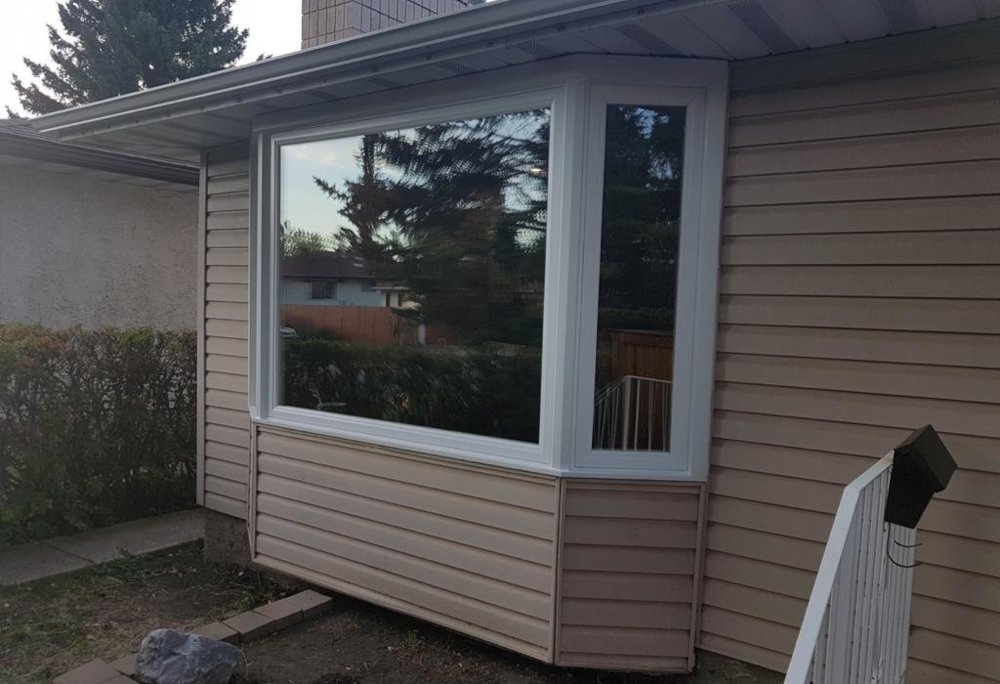

For most Canadian homes in colder climates, triple-pane windows are worth it on north- and west-facing walls, large openings, and any room with persistent cold spots, condensation, or high heating costs. For south-facing openings, smaller windows, and projects on a tighter budget, quality double-pane glass with a proper Low-E coating and argon fill remains a solid, cost-effective choice. The honest answer is that it depends on where in Canada you live, which walls the windows are on, and what your current windows are being replaced with.
Triple-pane windows cost roughly 15 to 25 percent more than a comparable double-pane unit. In Alberta, where Natural Resources Canada reports that windows can account for up to 35 percent of total house heat loss, that premium pays back through lower gas bills. In a milder climate, the payback takes longer, and the case is weaker. This guide covers what triple pane actually delivers, the real downsides that most articles skip, and a clear framework for deciding which option makes sense for your home.
Key takeaways
- Triple-pane windows outperform double-pane windows in sustained cold, reducing heat loss through the glass by roughly 30 to 40 percent compared with a standard double-pane unit.
- The upgrade is most worthwhile on north- and west-facing walls, large living room windows, and any opening where cold spots, frost, or condensation have been a persistent problem.
- Natural Resources Canada confirms that ENERGY STAR Most Efficient windows, which are typically triple pane, are up to 55 percent more energy-efficient than average models.
- Triple pane has real drawbacks: higher upfront cost, more weight, and a common problem with interior condensation in the first heating season after installation.
- In Calgary and Edmonton, triple-pane is the practical standard for north- and west-facing walls because sustained deep cold demands insulation depth that double-pane cannot reliably deliver over a full winter.
- The glass package and spacer matter as much as the number of panes. A triple-pane unit with an aluminum spacer can underperform a double-pane unit with a modern warm-edge spacer and dual-seal construction.
How Double Pane and Triple Pane Windows Actually Differ
The difference is not just one extra sheet of glass. Each additional pane adds an insulating gas chamber, and it is the gas and the seal system around it that do most of the thermal work, not the glass itself.
Double pane construction
A double-pane unit, also called double-glazed, consists of two panes of glass separated by a single gas-filled chamber. The gas is typically argon, which insulates better than plain air. The panes are held apart by a spacer running around the perimeter, and the whole assembly is sealed at the edge. Standard double-pane units perform well in moderate climates and on sheltered, south-facing walls, where solar gain helps offset heat loss. Fixed and slider windows in double pane remain a practical and cost-effective choice for interior or sheltered openings where the priority is light and ventilation rather than maximum insulation.
Triple pane construction
A triple pane unit adds a third pane and a second gas chamber. That second chamber creates an additional thermal barrier. On a cold night, the interior pane of a triple-pane window stays noticeably warmer than the interior pane of a double-pane window under the same conditions, which is why triple-pane windows resist condensation better and feel more comfortable to sit near. Most high-performance triple-pane units also use krypton gas in one or both chambers, which insulates more efficiently than argon in thinner spaces.
The U-factor: what the numbers actually mean
The U-factor measures how quickly heat escapes through a window. Lower is better. Natural Resources Canada reports that a better-performing double-pane window has a U-factor of around 1.2 W/m²K or lower, while a triple-pane unit can reach as low as 0.8 W/m²K. The gap between 1.2 and 0.8 is significant: it means the triple-pane unit loses heat roughly 33 percent more slowly under the same conditions. On a Calgary night at -25°C, that difference translates directly into how cold the interior glass surface gets and how hard your furnace has to work.
Double Pane vs Triple Pane: Head to Head
| Feature | Double pane | Triple pane |
|---|---|---|
| Glass layers | 2 | 3 |
| Gas chambers | 1 (argon) | 2 (argon or krypton) |
| Typical U-factor (W/m²K) | 1.2 to 1.6 | 0.8 to 1.1 |
| Condensation resistance | Good | Excellent |
| Noise reduction | Good | Better (up to 50% more than double pane) |
| Weight | Standard | 15 to 25% heavier |
| Upfront cost premium | Baseline | 15 to 25% more |
| Best for | Sheltered walls, milder climates, south-facing | North and west walls, cold climates, large openings |
The Real Pros of Triple Pane Windows in Canada’s Climate
Triple pane windows improve four key areas in Canada’s climate: thermal comfort, condensation control, energy costs, and noise. The gains are real and measurable, but they are not uniform across all walls and all homes. The sections below cover what each benefit looks like in practice for homeowners in Calgary and Edmonton.
Better thermal performance on the coldest nights
The most immediate benefit is comfort. A well-specified triple-pane unit keeps the interior glass surface warm enough that you can sit near a large window on a -20°C night without feeling the cold radiation that makes the room uncomfortable even when the thermostat reads 21°C. This is not a marginal improvement. Most homeowners who upgrade from older double-pane or single-pane units to triple-pane units notice it on the first cold night, before any change in their energy bill appears.
Significantly less condensation
Condensation appears when the interior glass surface cools below the dew point of the indoor air. Triple-pane glass helps keep the surface warmer, so your home can maintain a higher indoor humidity level before fog forms on the glass. For Calgary and Edmonton homeowners who run a humidifier through winter, this is one of the most practical day-to-day benefits. Less condensation also means less moisture dripping onto frames and sills, which is where long-term moisture damage begins.
Lower heat loss, lower gas bills
The energy case is real, though the payback timeline depends on your current windows and climate. Natural Resources Canada reports that ENERGY STAR Most Efficient windows, which are typically triple-pane, are up to 55 percent more energy-efficient than average models. Upgrading from genuinely old single-pane or early double-pane units to modern triple-pane glass can reduce heating costs by 15 to 25 percent over a full Alberta winter. On a home with a $2,400 annual gas bill, that is $360 to $600 per year.
Better noise reduction
The additional pane and gas layer absorb more sound than a double pane unit. Homes near busy roads, flight paths, or active streets will notice a meaningful difference. Independent estimates put the noise reduction improvement at up to 50 percent compared with double pane when windows are properly installed with tight compression seals.
The Honest Cons and Common Problems With Triple Pane Windows
Most articles about triple pane windows skip the downsides. These are real considerations that should factor into your decision, not dealbreakers, but worth knowing before you commit.
Higher upfront cost
Triple-pane units cost 15 to 25 percent more per opening than comparable double-pane units. On a full home replacement of 12 to 16 windows, that premium adds up to a meaningful number. It is worth calculating the payback period based on your current gas bills and climate zone before assuming the upgrade will always pay off.
More weight on the frame and hardware
A triple-pane unit is typically 15 to 25 percent heavier than a double-pane unit of the same size. For large openings like picture windows and bay configurations, that extra weight places more load on the frame and the rough opening. A quality installation accounts for this with properly sized hardware and framing. A rushed or cheap installation on a large triple-pane unit can lead to sagging sashes and hardware that wears out faster than it should.
Interior condensation in the first heating season
This is the most common problem homeowners report after installing triple pane windows, and it catches many people off guard. Triple pane windows keep the interior glass so warm that the dew point in your home may appear on other cold surfaces rather than the glass, or the improved airtightness of the new windows can temporarily raise indoor humidity above what the old leaky units allowed the house to shed. In the first winter after installation, some homes see condensation in places they never did before, particularly on older walls and ceiling corners near the new windows. This usually resolves within one heating season as the home reaches a new equilibrium. Managing indoor humidity with a hygrometer and adjusting the humidifier setting is the practical fix.
Reduced solar heat gain on south-facing walls
Triple-pane glass with multiple Low-E coatings reduces solar gain alongside heat loss. On a well-placed south-facing wall in Calgary, that solar gain is free heat in winter, and double-pane glass with a higher Solar Heat Gain Coefficient (SHGC) may actually keep a south-facing room warmer and more comfortable through a cold Alberta winter than a triple-pane unit optimized for insulation. Specifying the right glass package by wall orientation is something a knowledgeable installer will address in the quote.
Not all triple-pane units are equal
A triple-pane window with an aluminum spacer, which conducts cold from the outer edge to the inner glass surface, can underperform a well-specified double-pane unit with a modern warm-edge spacer and dual-seal construction. The number of panes is not the only variable. The spacer, the gas fill, the Low-E coating, and the seal quality all determine whether the window actually performs to the specification on the box.
“The question we get most is whether triple pane is worth it. In Calgary and Edmonton, the answer for north and west walls is almost always yes, because those openings are working harder than any other surface in the house through a cold snap. The ones people regret are south-facing rooms where they installed triple pane and then wondered why the space felt colder in winter than before, because they gave up solar gain they were relying on without realizing it.” – Chris Perry, Project Manager at Weather Pro Windows and Doors
Is Triple Pane Worth It in Calgary and Edmonton?
In most of Canada, triple pane is a premium option you choose for specific walls and situations. In Calgary and Edmonton, it is closer to the practical standard for exposed openings due to sustained cold.
Calgary
Calgary’s climate presents a specific challenge for windows. The city hits -25°C to -30°C during cold snaps, then a Chinook can push the temperature up by 15°C within hours. That repeated thermal cycling continuously stresses the seals and spacers. Triple-pane windows in Calgary provide the insulation depth to handle those cold snaps without the interior glass dropping below the dew point, and modern warm-edge spacers are better equipped to handle the expansion and contraction cycles than older aluminum spacers. For north- and west-facing walls, triple-pane is the clear recommendation. For south and east-facing walls where solar gain helps, a well-specified double-pane window unit with a high-SHGC glass package may be equally comfortable and more cost-effective.
Edmonton
Edmonton’s case for triple-pane windows is even stronger because the cold is sustained rather than cyclical. While Calgary gets Chinook relief, Edmonton can sit at -25°C to -35°C for weeks at a time without that recovery period. Triple-pane windows in Edmonton are the standard recommendation for any exposed wall because a double-pane unit with an aluminum spacer will have its interior glass surface drop below freezing on the coldest nights, causing frost at the frame edge and continuous heat loss that shows up on the gas bill every January. The payback period for triple-pane windows in Edmonton is shorter than in most Canadian cities simply because the heating season is longer and the temperature differential is larger. Some Edmonton homeowners also consider triple-glazed windows from European-profile manufacturers for the most exposed north-facing openings, where the krypton gas fill and narrower pane spacing deliver the highest insulation values available in a residential unit.
When Double Pane Makes More Sense Than Triple Pane
Triple pane is not the right answer for every opening or every budget. Double pane is the better choice when:
- The wall faces south or southeast. Solar gain from a south-facing wall can offset heat loss significantly in winter. A high-SHGC double-pane unit can outperform a triple-pane unit optimized for insulation on a sunny south wall.
- The opening is small. For small bathroom windows, utility rooms, or narrow side windows, the cost premium of triple pane is hard to justify. The heat loss from a small opening is proportionally low.
- The budget is the primary constraint. A quality double-pane unit, properly installed, is dramatically better than an old, failed unit. If the choice is between replacing more windows with double-pane windows or fewer with triple-pane windows, replacing more of the worst units first usually delivers greater total comfort improvement.
- The climate is mild. In Vancouver, Victoria, and the more temperate parts of BC, the premium for triple-pane is harder to recoup. The heating season is shorter and the temperature differential smaller.
What Triple Pane Windows Cost in Canada
Triple-pane windows cost roughly 15 to 25 percent more than comparable double-pane units. In practical terms for the Canadian market in 2026:
- Standard vinyl casement or slider, double pane: approximately $800 to $1,500+ installed.
- Same window in triple pane: approximately $1,000 to $1,900+ installed, depending on glass specification and frame size.
- Full home upgrade, triple pane throughout (10 to 16 windows): typically $12,000 to $24,000 for a three-bedroom home in Alberta, depending on styles, openings, and installation method.
The gap between double and triple pane narrows when you compare high-spec double pane (warm-edge spacer, dual seal, premium Low-E) against entry-level triple pane. A mid-market triple-pane unit from a quality manufacturer is often a better value than a premium double-pane unit at a similar price point, because the extra gas chamber adds more performance than the coating upgrades alone.
The payback timeline varies. In Edmonton and Calgary, where gas bills are higher and the heating season longer, many homeowners recoup the premium within 8 to 12 years through energy savings. In milder markets, payback can extend to 15 years or more.
The Bottom Line on Double Pane vs Triple Pane in Canada
For most Canadian homes in Alberta, the answer on triple-pane windows is not whether they are better but where they are better and whether the premium makes sense for your specific situation. On north and west-facing walls in Calgary and Edmonton, they are the practical standard. The U-factor gap between a quality triple-pane unit at 0.8 W/m²K and a standard double-pane at 1.6 W/m²K is not a marginal improvement. It is the difference between a glass surface that stays warm and dry through a sustained -30°C week and one that frosts at the edge and radiates cold into the room every night.
The honest framework is this: start with your worst-performing walls, your worst-performing openings, and your actual gas bill. If you have north-facing rooms with cold spots and condensation, triple-pane windows are the right call and will pay off. If you have south-facing rooms with good winter sun, do not give up that solar gain for insulation you do not need on those specific walls. If budget means choosing between replacing more windows with double-pane and fewer with triple-pane, replacing more of the worst units almost always yields greater total improvement.
The glass package and spacer matter as much as the number of panes. A triple-pane unit with a warm-edge spacer, dual seal, and a properly specified Low-E coating will outperform a poorly specified triple-pane unit from the same factory. The specification on the quote, not the number of panes on the brochure, is what you are actually buying. Ask for the U-factor, the Energy Rating, and the spacer type before comparing prices.
Frequently Asked Questions
Are triple pane windows worth it in Canada?
For north and west-facing walls in colder cities like Calgary and Edmonton, yes. Triple pane delivers better insulation, less condensation, and lower heat loss, which pay back in gas bills over time. For south-facing walls, milder climates, or smaller openings, quality double-pane windows are often a smarter choice.
What are the problems with triple pane windows?
The most common issues are a higher upfront cost, extra weight on the frame, reduced solar heat gain on south-facing walls, and a first-winter condensation adjustment period as the home adapts to the new level of airtightness. None of these are dealbreakers, but they are worth knowing before installation.
How much more do triple pane windows cost?
Triple-pane units typically cost 15 to 25 percent more per opening than comparable double-pane units. For a full home project, that premium can add $2,000 to $5,000, depending on the window count and styles.
Is triple pane worth it in Calgary?
Yes, for most exposed walls. Calgary’s temperature swings and cold snaps make the depth of triple-pane insulation worthwhile for north- and west-facing openings. South-facing walls with good solar access may be better served by a high-SHGC double-pane unit.
Is triple pane worth it in Edmonton?
More so than in Calgary, because Edmonton’s cold is sustained rather than cyclical. Weeks at -25°C to -35°C without chinook relief mean the interior glass of a double-pane unit with an aluminum spacer will drop below freezing on the coldest nights, causing frost and continuous heat loss.
What U-factor should I look for in a triple pane window in Canada?
Natural Resources Canada notes that high-performance triple-pane units can achieve U-factors as low as 0.8 W/m2K. For Alberta’s climate, look for a U-factor of 1.0 or lower. The lower the number, the less heat escapes through the glass.